

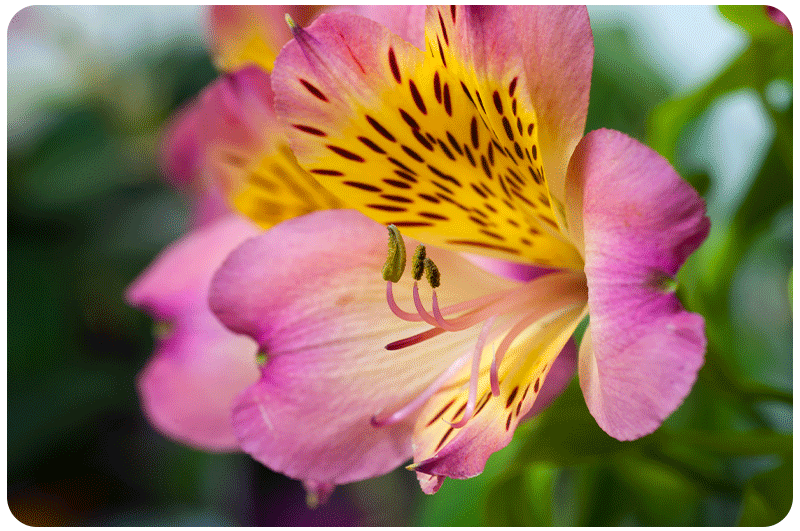
RIO ALSTROEMERIA
RIO ALSTROEMERIA
RIO ANEMONES
RIO ASTERS
RIO BELLS OF IRELAND
RIO CALLA LILIES
RIO CRASPEDIA
RIO DELPHINIUM
RIO DISBUDS
RIO DUSTY MILLER
RIO ERYNGIUM
RIO KIWI MELLOW COOL
RIO GYPSOPHILA
RIO HYDRANGEA
RIO HYPERICUM
RIO LILIES
RIO LIMONIUM
RIO LISIANTHUS
RIO MARIGOLD
RIO MINI CALLA LILIES
RIO POMPONS
RIO RANUNCULUS
RIO SCOOP SCABIOSA
RIO STARS OF BETHLEHEM
RIO STATICE
RIO STOCK
RIO SUNFLOWERS
Alstroemeria
Alstroemeria, commonly known as the Peruvian Lily, is celebrated for its vibrant colors and longevity as a cut flower. Native to the cool mountains of South America, these flowers bring a splash of color and a touch of exotic flair to bouquets and floral arrangements. Proper care and handling are essential to maintain their beauty and extend vase life. This guide provides detailed instructions to ensure your Alstroemerias stay fresh and vibrant.
1. Do Your Homework- The #1 rule for great care and handling is to buy quality alstroemeria, like Rio Alstroemeria. Proper care and handling will optimize the alstroemeria’s potential performance.
- Test your water pH, alkalinity, TDS, and hardness.
- Look for a hydration solution that suits your needs.
- The single biggest factor in the longevity of alstroemeria is consistent, cold temperature. Ensure proper Cold Chain Management when transporting Rio Alstroemeria to your location.
- Cold Chain Management ensures Rio Alstroemeria is transported from Miami to your location in a controlled cold environment. Only refrigerated trucks, not overnight carriers like FedEx or UPS, can keep the temperature consistent.
- Cooler temperature should be 33–37°F. Flowers stored at 40°F or above will deteriorate two to three times faster than flowers stored at 36°F.
- The humidity level should be 80% or above, especially if the flowers are not in a hydration solution.
- If possible, test for excess build-out of ethylene gas.
- Inspect your Rio Alstroemeria upon arrival. If you receive damaged or unusable alstroemeria, immediately notify your wholesaler and/or Equiflor.
- Please have the box labels handy. They contain important information about the farm and airway bill that will help us identify and correct the problem.
- Start with clean buckets. Bacteria in dirty buckets will clog the alstroemeria’s vascular system and prevent good uptake of the food solution.
- Bleach is not your best cleaning agent as it kills bacteria immediately, but its shelf life is only one to four hours, so it won’t continue to kill bacteria.
- Clean your cooler with a cleaning detergent at least once every quarter (three months). Clean the floor, walls, ceiling, and cooler coils.
- Determine the solution you will use. You can choose from holding solutions or sugar-based solutions to promote opening.
- Add hydration solution to cold water. If cold water is not available, we recommend preparing the solution and placing the buckets with the solution inside the cooler the evening before.
- Strip only the foliage that will fall below the solution level.
- Cut at least an inch off the bottom of each stem/bunch. We recommend cutting alstroemeria underwater whenever possible.
- Place alstroemeria immediately into the cold-water hydration solution. Quick Dip is not a long-term hydration solution. Once in the hydration solution, move the alstroemeria to the cooler.
- Choose the food solution that best fits your shop’s needs. If you move your alstroemeria quickly, you won’t need a holding solution. If you hold them for a few days, you may need a holding solution.
- Use a holding solution for Rio Alstroemeria coming into your shop and a sugar-based solution for everything leaving your shop.
- Teach your staff to educate customers on caring for their alstroemeria, including what to expect from individual varieties.
- Recommend short- and long-term hydration solutions to your customers.
- Advise customers to keep their alstroemeria in a cool spot away from direct sunlight.
- Inform customers that alstroemeria blooms open over time, transforming from buds to vibrant flowers.
This comprehensive approach to the care and handling of Alstroemeria ensures that these charming flowers maintain their allure and longevity, bringing lasting joy from the store to the home or event.
Alstroemeria
Alstroemeria, commonly known as the Peruvian Lily, is celebrated for its vibrant colors and longevity as a cut flower. Native to the cool mountains of South America, these flowers bring a splash of color and a touch of exotic flair to bouquets and floral arrangements. Proper care and handling are essential to maintain their beauty and extend vase life. This guide provides detailed instructions to ensure your Alstroemerias stay fresh and vibrant.
1. Do Your Homework- The #1 rule for great care and handling is to buy quality alstroemeria, like Rio Alstroemeria. Proper care and handling will optimize the alstroemeria’s potential performance.
- Test your water pH, alkalinity, TDS, and hardness.
- Look for a hydration solution that suits your needs.
- The single biggest factor in the longevity of alstroemeria is consistent, cold temperature. Ensure proper Cold Chain Management when transporting Rio Alstroemeria to your location.
- Cold Chain Management ensures Rio Alstroemeria is transported from Miami to your location in a controlled cold environment. Only refrigerated trucks, not overnight carriers like FedEx or UPS, can keep the temperature consistent.
- Cooler temperature should be 33–37°F. Flowers stored at 40°F or above will deteriorate two to three times faster than flowers stored at 36°F.
- The humidity level should be 80% or above, especially if the flowers are not in a hydration solution.
- If possible, test for excess build-out of ethylene gas.
- Inspect your Rio Alstroemeria upon arrival. If you receive damaged or unusable alstroemeria, immediately notify your wholesaler and/or Equiflor.
- Please have the box labels handy. They contain important information about the farm and airway bill that will help us identify and correct the problem.
- Start with clean buckets. Bacteria in dirty buckets will clog the alstroemeria’s vascular system and prevent good uptake of the food solution.
- Bleach is not your best cleaning agent as it kills bacteria immediately, but its shelf life is only one to four hours, so it won’t continue to kill bacteria.
- Clean your cooler with a cleaning detergent at least once every quarter (three months). Clean the floor, walls, ceiling, and cooler coils.
- Determine the solution you will use. You can choose from holding solutions or sugar-based solutions to promote opening.
- Add hydration solution to cold water. If cold water is not available, we recommend preparing the solution and placing the buckets with the solution inside the cooler the evening before.
- Strip only the foliage that will fall below the solution level.
- Cut at least an inch off the bottom of each stem/bunch. We recommend cutting alstroemeria underwater whenever possible.
- Place alstroemeria immediately into the cold-water hydration solution. Quick Dip is not a long-term hydration solution. Once in the hydration solution, move the alstroemeria to the cooler.
- Choose the food solution that best fits your shop’s needs. If you move your alstroemeria quickly, you won’t need a holding solution. If you hold them for a few days, you may need a holding solution.
- Use a holding solution for Rio Alstroemeria coming into your shop and a sugar-based solution for everything leaving your shop.
- Teach your staff to educate customers on caring for their alstroemeria, including what to expect from individual varieties.
- Recommend short- and long-term hydration solutions to your customers.
- Advise customers to keep their alstroemeria in a cool spot away from direct sunlight.
- Inform customers that alstroemeria blooms open over time, transforming from buds to vibrant flowers.
This comprehensive approach to the care and handling of Alstroemeria ensures that these charming flowers maintain their allure and longevity, bringing lasting joy from the store to the home or event.
Anemones
Anemones' vibrant petal colors and contrasting dark centers bring a distinctive drama to floral arrangements. Caring for these enchanting flowers from arrival to final display is key to maximizing their vase life. Follow this guide for the best practices in managing Anemones, ensuring they remain stunning from your store to the customer's hands.
1. Do Your Homework- The #1 rule for great care and handling is to buy quality anemones, like Rio Anemones. Proper care and handling will optimize their potential performance.
- Test your water pH, alkalinity, TDS, and hardness.
- Look for a hydration solution that suits your needs.
- The single biggest factor in the longevity of anemones is consistent, cold temperature. Ensure proper Cold Chain Management when transporting Rio Anemones to your location.
- Cold Chain Management ensures Rio Anemones are transported from Miami to your location in a controlled cold environment. Only refrigerated trucks, not overnight carriers like FedEx or UPS, can keep the temperature consistent.
- Cooler temperature should be 33–37°F. Flowers stored at 40°F or above will deteriorate two to three times faster than flowers stored at 36°F.
- The humidity level should be 80% or above, especially if the flowers are not in a hydration solution.
- If possible, test for excess build-out of ethylene gas.
- Inspect your Rio Anemones upon arrival. If you receive damaged or unusable anemones, immediately notify your wholesaler and/or Equiflor.
- Please have the box labels handy. They contain important information about the farm and airway bill that will help us identify and correct the problem.
- Start with clean buckets. Bacteria in dirty buckets will clog the anemone’s vascular system and prevent good uptake of the food solution.
- Bleach is not your best cleaning agent as it kills bacteria immediately, but its shelf life is only one to four hours, so it won’t continue to kill bacteria.
- Clean your cooler with a cleaning detergent at least once every quarter (three months). Clean the floor, walls, ceiling, and cooler coils.
- Determine the solution you will use. You can choose from holding solutions or sugar-based solutions to promote opening.
- Add hydration solution to cold water. If cold water is not available, we recommend preparing the solution and placing the buckets with the solution inside the cooler the evening before.
- Strip only the foliage that will fall below the solution level.
- Cut at least an inch off the bottom of each stem/bunch. We recommend cutting anemones underwater whenever possible.
- Place anemones immediately into the cold-water hydration solution. Quick Dip is not a long-term hydration solution. Once in the hydration solution, move the anemones to the cooler.
- Choose the food solution that best fits your shop’s needs. If you move your anemones quickly, you won’t need a holding solution. If you hold them for a few days, you may need a holding solution.
- Use a holding solution for Rio Anemones coming into your shop and a sugar-based solution for everything leaving your shop.
- Anemones can be fast to open and have a relatively short vase life (3-8 days). Design arrangements close to event time to ensure peak freshness.
- Teach your staff to educate customers on caring for their anemones, including what to expect from individual varieties.
- Recommend short- and long-term hydration solutions to your customers.
Caring for Anemones requires a dedicated approach to maintain their allure. Following these guidelines, you can provide the best conditions for Anemones, delighting customers with their enduring beauty.
Asters
With their vibrant colors and star-shaped flowers, asters add a delightful charm to gardens and floral arrangements. Their enduring appeal makes understanding proper care and handling techniques essential to maintain their beauty and extend their vase life. This guide is designed to assist you in managing asters from the moment they arrive until they are delivered to the customer, ensuring their optimal condition and longevity.
1. Do Your Homework- The #1 rule for great care and handling is to buy quality asters, like Rio Asters. Proper care and handling will optimize their potential performance.
- Test your water pH, alkalinity, TDS, and hardness.
- Look for a hydration solution that suits your needs.
- The single biggest factor in the longevity of asters is consistent, cold temperature. Ensure proper Cold Chain Management when transporting Rio Asters to your location.
- Cold Chain Management ensures Rio Asters are transported from Miami to your location in a controlled cold environment. Only refrigerated trucks, not overnight carriers like FedEx or UPS, can keep the temperature consistent.
- Cooler temperature should be 33–37°F. Flowers stored at 40°F or above will deteriorate two to three times faster than flowers stored at 36°F.
- The humidity level should be 80% or above, especially if the flowers are not in a hydration solution.
- If possible, test for excess build-out of ethylene gas.
- Inspect your Rio Asters upon arrival. If you receive damaged or unusable asters, immediately notify your wholesaler and/or Equiflor.
- Please have the box labels handy. They contain important information about the farm and airway bill that will help us identify and correct the problem.
- Start with clean buckets. Bacteria in dirty buckets will clog the aster’s vascular system and prevent good uptake of the food solution.
- Bleach is not your best cleaning agent as it kills bacteria immediately, but its shelf life is only one to four hours, so it won’t continue to kill bacteria.
- Clean your cooler with a cleaning detergent at least once every quarter (three months). Clean the floor, walls, ceiling, and cooler coils.
- Determine the solution you will use. You can choose from holding solutions or sugar-based solutions to promote opening.
- Add hydration solution to cold water. If cold water is not available, we recommend preparing the solution and placing the buckets with the solution inside the cooler the evening before
- Strip only the foliage that will fall below the solution level.
- Cut one to two inches off the bottom of each stem/bunch. We recommend cutting asters underwater whenever possible.
- Place asters immediately into the cold-water hydration solution. Quick Dip is not a long-term hydration solution. Once in the hydration solution, move the asters to the cooler.
- Choose the food solution that best fits your shop’s needs. If you move your asters quickly, you won’t need a holding solution. If you hold them for a few days, you may need a holding solution.
- Use a holding solution for Rio Asters coming into your shop and a sugar-based solution for everything leaving your shop.
- Teach your staff to educate customers on caring for their asters, including what to expect from individual varieties.
- Offer advice for addressing common issues with asters, like wilting or premature bloom drop.
- Recommend short- and long-term hydration solutions to your customers.
By adhering to these guidelines, you can ensure your Rio Asters remain vibrant and appealing from arrival to their final destination, enriching arrangements and delighting customers with their natural beauty.
Bells of Ireland
Bells of Ireland, known for their striking green spikes and unique bell-shaped calyces, bring height and elegance to any floral arrangement. A member of the mint family, these stems are a favorite among florists for their versatility and year-round availability. However, like all cut flowers, they require careful handling to maintain their freshness and vibrant appearance. Here’s how to ensure your Bells of Ireland stay at their best from when they arrive at your shop to when they delight your customers.
1. Do Your Homework- The #1 rule for great care and handling is to buy quality Bells of Ireland, like Rio Bells of Ireland. Proper care and handling will optimize the flowers’ potential performance.
- Test your water pH, alkalinity, TDS, and hardness.
- Look for a hydration solution that suits your needs.
- The single biggest factor in the longevity of Bells of Ireland is consistent, cold temperature. Ensure proper Cold Chain Management when transporting Rio Bells of Ireland to your location.
- Cold Chain Management ensures Rio Bells of Ireland are transported from Miami to your location in a controlled cold environment. Only refrigerated trucks, not overnight carriers like FedEx or UPS, can keep the temperature consistent.
- Cooler temperature should be 33–37°F. Flowers stored at 40°F or above will deteriorate two to three times faster than flowers stored at 36°F.
- The humidity level should be 80% or above, especially if the flowers are not in a hydration solution.
- If possible, test for excess build-out of ethylene gas.
- Inspect your Rio Bells of Ireland upon arrival. If you receive damaged or unusable Bells of Ireland, immediately notify your wholesaler and/or Equiflor.
- Please have the box labels handy. They contain important information about the farm and airway bill to help us identify and correct the problem.
- Start with clean buckets. Bacteria in dirty buckets will clog the Bells of Ireland’s vascular system and prevent good uptake of the food solution.
- Bleach is not your best cleaning agent as it kills bacteria immediately, but its shelf life is only one to four hours, so it won’t continue to kill bacteria.
- Clean your cooler with a cleaning detergent at least once every quarter (three months). Clean the floor, walls, ceiling, and cooler coils.
- Determine the solution you will use. You can choose from holding solutions or sugar-based solutions to promote opening.
- Add hydration solution to cold water. If cold water is not available, we recommend preparing the solution and placing the buckets with the solution inside the cooler the evening before.
- Strip only the foliage that will fall below the solution level.
- As Bells of Ireland stems have sharp thorns, wear gloves when handling them.
- Cut at least an inch off the bottom of each stem/bunch. We recommend cutting Bells of Ireland underwater whenever possible.
- Place Bells of Ireland immediately into the cold-water hydration solution. Quick Dip is not a long-term hydration solution. Once in the hydration solution, move the Bells of Ireland to the cooler.
- Store the Bells of Ireland away from side light, as they will bend toward the light.
- Choose the food solution that best fits your shop’s needs. If you move your Bells of Ireland quickly, you won’t need a holding solution. If you hold them for a few days, you may need a holding solution.
- Use a holding solution for Rio Bells of Ireland coming into your shop and a sugar-based solution for everything leaving your shop.
- Teach your staff to educate customers on caring for their Bells of Ireland.
- Recommend short- and long-term hydration solutions to your customers. This is particularly important with Bells of Ireland, as the stems will get slimy if water isn’t changed often.
Bells of Ireland are more than just a beautiful addition to arrangements; they symbolize good fortune and a testament to thoughtful floral design. By following these care and handling tips, you can maximize the vase life and visual appeal of your Bells of Ireland, ensuring they continue to bring their unique charm to every bouquet.
Calla Lilies
Calla lilies, with their elegant trumpet-shaped blooms, are a beloved choice for bouquets and décor and symbolize purity and beauty. Proper care and handling are essential to maintain their sophisticated appearance and longevity. Follow this guide to manage your callas from arrival to customer delivery, guaranteeing their best health and durability.
1. Do Your Homework- The #1 rule for great care and handling is to buy quality callas, like Rio Calla Lilies. Proper care and handling will optimize the calla’s potential performance.
- Test your water pH, alkalinity, TDS, and hardness.
- Look for a hydration solution that suits your needs.
- The single biggest factor in the longevity of calla lilies is consistent, cold temperature. Ensure proper Cold Chain Management when transporting Rio Calla Lilies to your location.
- Cold Chain Management ensures Rio Calla Lilies are transported from Miami to your location in a controlled cold environment. Only refrigerated trucks, not overnight carriers like FedEx or UPS, can keep the temperature consistent.
- Cooler temperature should be 33–37°F. Flowers stored at 40°F or above will deteriorate two to three times faster than flowers stored at 36°F.
- The humidity level should be 80% or above, especially if the flowers are not in a hydration solution.
- If possible, test for excess build-out of ethylene gas.
- Inspect your Rio Calla Lilies upon arrival. If you receive damaged or unusable callas, immediately notify your wholesaler and/or Equiflor.
- Please have the box labels handy. They contain important information about the farm and airway bill that will help us identify and correct the problem.
- Start with clean buckets. Bacteria in dirty buckets will clog the calla’s vascular system and prevent good uptake of the food solution.
- Bleach is not your best cleaning agent as it kills bacteria immediately, but its shelf life is only one to four hours, so it won’t continue to kill bacteria.
- Clean your cooler with a cleaning detergent at least once every quarter (three months). Clean the floor, walls, ceiling, and cooler coils.
- Determine the solution you will use. You can choose from holding solutions or sugar-based solutions to promote opening.
- Add hydration solution to cold water. If cold water is not available, we recommend preparing the solution and placing the buckets with the solution inside the cooler the evening before.
- Cut at least an inch off the bottom of each stem/bunch. We recommend cutting calla lilies underwater whenever possible.
- Place callas immediately into the cold-water hydration solution. Quick Dip is not a long-term hydration solution. Once in the hydration solution, move the callas to the cooler.
- Leave the sleeves on and allow the callas to hydrate for approximately four hours. Once hydrated, remove the sleeves.
- Choose the food solution that best fits your shop’s needs. If you move your callas quickly, you won’t need a holding solution. If you hold them for a few days, you may need a holding solution.
- Use a holding solution for Rio Calla Lilies coming into your shop and a sugar-based solution for everything leaving your shop.
- Teach your staff to educate customers on caring for their calla lilies, including handling them gently to prevent bruising.
- Recommend short- and long-term hydration solutions to your customers.
- Suggest remedies for common issues, like what to do if the callas begin to wilt.
Incorporating these guidelines will ensure your Rio Calla Lilies retain their elegance and beauty from your store to the customer’s destination.
Craspedia
Native to Australia and New Zealand, Craspedia has become a favorite among florists due to its bold, spherical blooms, vibrant yellow color, and long-lasting nature. Whether fresh or dried, this hardy flower adds texture, dimension, and a pop of color to bouquets, centerpieces, and even wreaths. Here’s how to properly care for and handle Craspedia to ensure its longevity and vibrant appearance.
1. Do Your Homework- The #1 rule for great care and handling is to buy quality craspedia, like Rio Craspedia. Proper care and handling will optimize the craspedia’s potential performance.
- Test your water pH, alkalinity, TDS, and hardness.
- Look for a hydration solution that suits your needs.
- The single biggest factor in craspedia longevity is consistent, cold temperature. Ensure proper Cold Chain Management when transporting Rio Craspedia to your location.
- Cold Chain Management ensures Rio Craspedia is transported from Miami to your location in a controlled cold environment. Only refrigerated trucks, not overnight carriers like FedEx or UPS, can keep the temperature consistent.
- Cooler temperature should be 33–37°F. Flowers stored at 40°F or above will deteriorate two to three times faster than flowers stored at 36°F.
- The humidity level should be 80% or above, especially if the flowers are not in a hydration solution.
- If possible, test for excess build-out of ethylene gas.
- Inspect your Rio Craspedia upon arrival. If you receive damaged or unusable craspedia, immediately notify your wholesaler and/or Equiflor.
- Please have the box labels handy. They contain important information about the farm and airway bill that will help us identify and correct the problem.
- Start with clean buckets. Bacteria in dirty buckets will clog the craspedia’s vascular system and prevent good uptake of the food solution.
- Bleach is not your best cleaning agent as it kills bacteria immediately, but its shelf life is only one to four hours, so it won’t continue to kill bacteria.
- Clean your cooler with a cleaning detergent at least once every quarter (three months). Clean the floor, walls, ceiling, and cooler coils.
- Determine the solution you will use. You can choose from holding solutions or sugar-based solutions to promote opening.
- Add hydration solution to cold water. If cold water is not available, we recommend preparing the solution and placing the buckets with the solution inside the cooler the evening before.
- Cut at least an inch off the bottom of each stem/bunch. We recommend cutting craspedia underwater whenever possible.
- Place the craspedia immediately into the cold-water hydration solution. Quick Dip is not a long-term hydration solution. Once in the hydration solution, move the craspedia to the cooler..
- Choose the food solution that best fits your shop’s needs. If you move your craspedia quickly, you won’t need a holding solution. If you hold them for a few days, you may need a holding solution.
- Use a holding solution for Rio Craspedia coming into your shop and a sugar-based solution for everything leaving your shop.
- Teach your staff to educate customers on caring for their craspedia.
- Recommend short- and long-term hydration solutions to your customers.
- Provide customers with information on how to dry their craspedia, so they can enjoy it for much longer.
Rio Craspedia offers beauty and resilience, making it a standout choice for florists who value versatility and durability. By following these care and handling guidelines, you can ensure that this unique bloom maintains its bright color and sturdy form.
Delphinium
Delphiniums, with their striking spikes of vibrant blooms ranging from deep indigo to soft sky blue and pure white, are marvels in floral arrangements. Proper care and handling are essential for maintaining their beauty and extending their vase life. This guide offers a comprehensive approach to managing your delphiniums so that they remain a breathtaking sight.
1. Do Your Homework- The #1 rule for great care and handling is to buy quality delphiniums, like Rio Delphiniums. Proper care and handling will optimize the delphinium’s potential performance.
- Test your water pH, alkalinity, TDS, and hardness.
- Look for a hydration solution that suits your needs.
- The single biggest factor in the longevity of delphiniums is consistent, cold temperature. Ensure proper Cold Chain Management when transporting Rio Delphiniums to your location.
- Cold Chain Management ensures Rio Delphiniums are transported from Miami to your location in a controlled cold environment. Only refrigerated trucks, not overnight carriers like FedEx or UPS, can keep the temperature consistent.
- Cooler temperature should be 33–37°F. Flowers stored at 40°F or above will deteriorate two to three times faster than flowers stored at 36°F.
- The humidity level should be 80% or above, especially if the flowers are not in a hydration solution.
- If possible, test for excess build-out of ethylene gas.
- Inspect your Rio Delphiniums upon arrival. If you receive damaged or unusable delphiniums, immediately notify your wholesaler and/or Equiflor.
- Please have the box labels handy. They contain important information about the farm and airway bill that will help us identify and correct the problem.
- Start with clean buckets. Bacteria in dirty buckets will clog the delphinium’s vascular system and prevent good uptake of the food solution.
- Bleach is not your best cleaning agent as it kills bacteria immediately, but its shelf life is only one to four hours, so it won’t continue to kill bacteria.
- Clean your cooler with a cleaning detergent at least once every quarter (three months). Clean the floor, walls, ceiling, and cooler coils.
- Determine the solution you will use. You can choose from holding solutions or sugar-based solutions to promote opening.
- Add hydration solution to cold water. If cold water is not available, we recommend preparing the solution and placing the buckets with the solution inside the cooler the evening before.
- Cut at least an inch off the bottom of each stem/bunch. We recommend cutting delphiniums underwater whenever possible.
- Place delphiniums immediately into the cold-water hydration solution. Quick Dip is not a long-term hydration solution. Once in the hydration solution, move the delphiniums to the cooler.
- Choose the food solution that best fits your shop’s needs. If you move your delphiniums quickly, you won’t need a holding solution. If you hold them for a few days, you may need a holding solution.
- Use a holding solution for Rio Delphiniums coming into your shop and a sugar-based solution for everything leaving your shop.
- For tall varieties like delphiniums, consider using stem supports or arranging them in a way that prevents bending.
- Teach your staff to educate customers on caring for their delphiniums, including what to expect from individual varieties.
- Recommend short- and long-term hydration solutions to your customers.
By following these care and handling guidelines, you ensure your Delphiniums retain their stunning visual appeal and vitality, making them a cherished addition to any setting.
Disbuds
With their vast array of colors and durability, disbuds (single-stem chrysanthemums) are a favorite among florists and enthusiasts alike. Proper care and handling of these robust flowers are crucial to maximizing their vase life and ensuring they remain vibrant. Follow this guide from arrival to customer delivery to maintain optimal health and longevity of your disbuds.
1. Do Your Homework- The #1 rule for great care and handling is to buy quality disbuds, like Rio Disbuds. Proper care and handling will optimize the disbud’s potential performance.
- Test your water pH, alkalinity, TDS, and hardness.
- Look for a hydration solution that suits your needs.
- The single biggest factor in the longevity of disbuds is consistent, cold temperature. Ensure proper Cold Chain Management when transporting Rio Disbuds to your location.
- Cold Chain Management ensures Rio Disbuds are transported from Miami to your location in a controlled cold environment. Only refrigerated trucks, not overnight carriers like FedEx or UPS, can keep the temperature consistent.
- Cooler temperature should be 33–37°F. Flowers stored at 40°F or above will deteriorate two to three times faster than flowers stored at 36°F.
- The humidity level should be 80% or above, especially if the flowers are not in a hydration solution.
- If possible, test for excess build-out of ethylene gas.
- Inspect your Rio Disbuds upon arrival. If you receive damaged or unusable disbuds, immediately notify your wholesaler and/or Equiflor.
- Please have the box labels handy. They contain important information about the farm and airway bill that will help us identify and correct the problem.
- Start with clean buckets. Bacteria in dirty buckets will clog the disbud’s vascular system and prevent good uptake of the food solution.
- Bleach is not your best cleaning agent as it kills bacteria immediately, but its shelf life is only one to four hours, so it won’t continue to kill bacteria.
- Clean your cooler with a cleaning detergent at least once every quarter (three months). Clean the floor, walls, ceiling, and cooler coils.
- Determine the solution you will use. You can choose from holding solutions or sugar-based solutions to promote opening.
- Add hydration solution to cold water. If cold water is not available, we recommend preparing the solution and placing the buckets with the solution inside the cooler the evening before.
- Cut at least an inch off the bottom of each stem/bunch. We recommend cutting disbuds underwater whenever possible.
- Place disbuds immediately into the cold-water hydration solution. Quick Dip is not a long-term hydration solution. Once in the hydration solution, move the disbuds to the cooler.
- Choose the food solution that best fits your shop’s needs. If you move your disbuds quickly, you won’t need a holding solution. If you hold them for a few days, you may need a holding solution.
- Use a holding solution for Rio Disbuds coming into your shop and a sugar-based solution for everything leaving your shop.
- While robust disbuds should still be handled carefully to prevent shattering or damage to the blooms and foliage.
- Teach your staff to educate customers on caring for their disbuds, including what to expect from individual varieties.
- Recommend short- and long-term hydration solutions to your customers.
By adhering to these guidelines, your Rio Disbuds will retain their beauty and vitality, from your care to the customer's enjoyment.
Dusty Miller
Detailed care and handling instructions for this product are coming soon. Please check back or contact us with any immediate questions. We appreciate your patience as we enhance our online resources.
Known for its elegant silver foliage, Dusty Miller is a versatile addition to any floral arrangement. Often used for its textural appeal and associated with qualities of purity and hope, Dusty Miller is both hardy and visually striking. With a vase life of 7 to 10 days and the ability to be dried, Rio Dusty Miller is a must-have for enhancing your floral designs. Follow these care and handling tips to ensure your Dusty Miller maintains its soft beauty and longevity.
1. Do Your Homework- The #1 rule for great care and handling is to buy quality Dusty Miller, like Rio Dusty Miller. Proper care and handling will optimize the Dusty Miller’s potential performance.
- Test your water pH, alkalinity, TDS, and hardness.
- Look for a hydration solution that suits your needs.
- The single biggest factor in Dusty Miller longevity is consistent, cold temperature. Ensure proper Cold Chain Management when transporting Rio Dusty Miller to your location.
- Cold Chain Management ensures Rio Dusty Miller is transported from Miami to your location in a controlled cold environment. Only refrigerated trucks, not overnight carriers like FedEx or UPS, can keep the temperature consistent.
- Cooler temperature should be 33–37°F. Flowers stored at 40°F or above will deteriorate two to three times faster than flowers stored at 36°F.
- The humidity level should be 80% or above, especially if the flowers are not in a hydration solution.
- If possible, test for excess build-out of ethylene gas.
- Inspect your Rio Dusty Miller upon arrival. If you receive damaged or unusable Dusty Miller, immediately notify your wholesaler and/or Equiflor.
- Please have the box labels handy. They contain important information about the farm and airway bill that will help us identify and correct the problem.
- Start with clean buckets. Bacteria in dirty buckets will clog the Dusty Miller’s vascular system and prevent good uptake of the food solution.
- Bleach is not your best cleaning agent as it kills bacteria immediately, but its shelf life is only one to four hours, so it won’t continue to kill bacteria.
- Clean your cooler with a cleaning detergent at least once every quarter (three months). Clean the floor, walls, ceiling, and cooler coils.
- Determine the solution you will use. You can choose from holding solutions or sugar-based solutions to promote opening.
- Add hydration solution to cold water. If cold water is not available, we recommend preparing the solution and placing the buckets with the solution inside the cooler the evening before.
- Cut at least an inch off the bottom of each stem/bunch. We recommend cutting Dusty Miller underwater whenever possible.
- Place the Dusty Miller immediately into the cold-water hydration solution. Quick Dip is not a long-term hydration solution. Once in the hydration solution, move the Dusty Miller to the cooler.
- Choose the food solution that best fits your shop’s needs. If you move your Dusty Miller quickly, you won’t need a holding solution. If you hold them for a few days, you may need a holding solution.
- Use a holding solution for Rio Dusty Miller coming into your shop and a sugar-based solution for everything leaving your shop.
- Teach your staff to educate customers on caring for their Dusty Miller.
- Recommend short- and long-term hydration solutions to your customers.
- Include instructions on how to properly dry Dusty Miller so it can be used in dried arrangements as well.
By providing the proper care and handling, you can preserve the freshness and visual appeal of your Dusty Miller, allowing it to enhance your designs with its distinctive charm.
Eryngium
Rio Eryngium, commonly known as Sea Holly, is a captivating flower admired for its vibrant butterfly-blue color and architectural form. With its sharp, holly-like leaves and distinctive bracts surrounding true flowers, Eryngium adds texture and drama to any floral arrangement. To maintain its striking beauty and longevity, follow these care and handling tips.
1. Do Your Homework- The #1 rule for great care and handling is to buy quality Eryngium, like Rio Eryngium. Proper care and handling will optimize the Eryngium’s potential performance.
- Test your water pH, alkalinity, TDS, and hardness.
- Look for a hydration solution that suits your needs.
- The single biggest factor in Eryngium longevity is consistent, cold temperature. Ensure proper Cold Chain Management when transporting Rio Eryngium to your location.
- Cold Chain Management ensures Rio Eryngium is transported from Miami to your location in a controlled cold environment. Only refrigerated trucks, not overnight carriers like FedEx or UPS, can keep the temperature consistent.
- Cooler temperature should be 33–37°F. Flowers stored at 40°F or above will deteriorate two to three times faster than flowers stored at 36°F.
- The humidity level should be 80% or above, especially if the flowers are not in a hydration solution.
- If possible, test for excess build-out of ethylene gas.
- Inspect your Rio Eryngium upon arrival. If you receive damaged or unusable Eryngium, immediately notify your wholesaler and/or Equiflor.
- Please have the box labels handy. They contain important information about the farm and airway bill that will help us identify and correct the problem.
- Start with clean buckets. Bacteria in dirty buckets will clog the Eryngium’s vascular system and prevent good uptake of the food solution.
- Bleach is not your best cleaning agent as it kills bacteria immediately, but its shelf life is only one to four hours, so it won’t continue to kill bacteria.
- Clean your cooler with a cleaning detergent at least once every quarter (three months). Clean the floor, walls, ceiling, and cooler coils.
- Determine the solution you will use. You can choose from holding solutions or sugar-based solutions to promote opening.
- Add hydration solution to cold water. If cold water is not available, we recommend preparing the solution and placing the buckets with the solution inside the cooler the evening before.
- Cut at least an inch off the bottom of each stem/bunch. We recommend cutting Eryngium underwater whenever possible.
- Place the Eryngium immediately into the cold-water hydration solution. Quick Dip is not a long-term hydration solution. Once in the hydration solution, move the Eryngium to the cooler.
- Choose the food solution that best fits your shop’s needs. If you move your Eryngium quickly, you won’t need a holding solution. If you hold them for a few days, you may need a holding solution.
- Use a holding solution for Rio Eryngium coming into your shop and a sugar-based solution for everything leaving your shop.
- Teach your staff to educate customers on caring for their Eryngium.
- Recommend short- and long-term hydration solutions to your customers.
- Include instructions on how to properly dry Eryngium so it can be used in dried arrangements as well.
Rio Eryngium’s bold color and structural elegance make it an indispensable choice for florists seeking to create standout arrangements. By adhering to proper care and handling practices, you can ensure it remains a highlight in your designs.
Kiwi Mellow Cool
Kiwi Mellow Cool, a recent but popular addition to the floral world, has quickly captured the hearts of florists and consumers alike. This unique flower, which emerged from a chance mutation, offers a strikingly vibrant green hue and a fluffy, moss-like texture that adds both versatility and charm to any arrangement. Proper care and handling are vital for extending the vase life and preserving the appeal of these unique flowers. Use this guide to manage your kiwi mellow cool from when they arrive to when they reach the customer.
1. Do Your Homework- The #1 rule for great care and handling is to buy quality dianthus, like Rio Kiwi Mellow Cool. Proper care and handling will optimize the dianthus’ potential performance.
- Test your water pH, alkalinity, TDS, and hardness.
- Look for a hydration solution that suits your needs.
- The single biggest factor in the longevity of dianthus is consistent, cold temperature. Ensure proper Cold Chain Management when transporting Rio Kiwi Mellow Cool to your location.
- Cold Chain Management ensures Rio Kiwi Mellow Cool is transported from Miami to your location in a controlled cold environment. Only refrigerated trucks, not overnight carriers like FedEx or UPS, can keep the temperature consistent.
- Cooler temperature should be 33–37°F. Flowers stored at 40°F or above will deteriorate two to three times faster than flowers stored at 36°F.
- The humidity level should be 80% or above, especially if the flowers are not in a hydration solution.
- If possible, test for excess build-out of ethylene gas.
- Inspect your Rio Kiwi Mellow Cool upon arrival. If you receive damaged or unusable dianthus, immediately notify your wholesaler and/or Equiflor.
- Please have the box labels handy. They contain important information about the farm and airway bill to help us identify and correct the problem.
- Start with clean buckets. Bacteria in dirty buckets will clog the dianthus’ vascular system and prevent good uptake of the food solution.
- Bleach is not your best cleaning agent as it kills bacteria immediately, but its shelf life is only one to four hours, so it won’t continue to kill bacteria.
- Clean your cooler with a cleaning detergent at least once every quarter (three months). Clean the floor, walls, ceiling, and cooler coils.
- Determine the solution you will use. You can choose from holding solutions or sugar-based solutions to promote opening.
- Add hydration solution to cold water. If cold water is not available, we recommend preparing the solution and placing the buckets with the solution inside the cooler the evening before.
- Strip only the foliage that will fall below the solution level.
- Cut at least an inch off the bottom of each stem/bunch. We recommend cutting dianthus underwater whenever possible.
- Place dianthus immediately into the cold-water hydration solution. Quick Dip is not a long-term hydration solution. Once in the hydration solution, move the dianthus to the cooler.
- Choose the food solution that best fits your shop’s needs. If you move your dianthus quickly, you won’t need a holding solution. If you hold them for a few days, you may need a holding solution.
- Use a holding solution for Rio Kiwi Mellow Cool coming into your shop and a sugar-based solution for everything leaving your shop.
- Teach your staff to educate customers on caring for their dianthus.
- Recommend short- and long-term hydration solutions to your customers.
The distinct beauty and versatility of Rio Kiwi Mellow Cool make it a standout choice for a wide range of floral designs. By adhering to the recommended care and handling practices, you can ensure that these striking blooms remain fresh and vibrant, enhancing any arrangement they are part of.
Gypsophila
Gypsophila, or baby's breath, is celebrated for its delicate and ethereal appearance. Its volume and texture make it a favorite choice in floral designs. This guide aims to ensure the optimal condition of gypsophila from its arrival to the point it reaches your customers, highlighting the best practices for its care and handling.
1. Do Your Homework- The #1 rule for great care and handling is to buy quality gypsophila, like Rio Gypsophila. Proper care and handling will optimize the gypsophila’s potential performance.
- Test your water pH, alkalinity, TDS, and hardness.
- Look for a hydration solution that suits your needs.
- The single biggest factor in the longevity of gypsophila is consistent, cold temperature. Ensure proper Cold Chain Management when transporting Rio Gypsophila to your location.
- Cold Chain Management ensures Rio Gypsophila is transported from Miami to your location in a controlled cold environment. Only refrigerated trucks, not overnight carriers like FedEx or UPS, can keep the temperature consistent.
- Cooler temperature should be 33–37°F. Flowers stored at 40°F or above will deteriorate two to three times faster than flowers stored at 36°F.
- The humidity level should be 80% or above, especially if the flowers are not in a hydration solution.
- If possible, test for excess build-out of ethylene gas.
- Inspect your Rio Gypsophila upon arrival. If you receive damaged or unusable gypsophila, immediately notify your wholesaler and/or Equiflor.
- Please have the box labels handy. They contain important information about the farm and airway bill that will help us identify and correct the problem.
- Start with clean buckets. Bacteria in dirty buckets will clog the gypsophila’s vascular system and prevent good uptake of the food solution.
- Bleach is not your best cleaning agent as it kills bacteria immediately, but its shelf life is only one to four hours, so it won’t continue to kill bacteria.
- Clean your cooler with a cleaning detergent at least once every quarter (three months). Clean the floor, walls, ceiling, and cooler coils.
- Determine the solution you will use. You can choose from holding solutions or sugar-based solutions to promote opening.
- Add hydration solution to cold water. If cold water is not available, we recommend preparing the solution and placing the buckets with the solution inside the cooler the evening before.
- Cut at least an inch off the bottom of each stem/bunch. We recommend cutting gypsophila underwater whenever possible.
- Place gypsophila immediately into the cold-water hydration solution. Quick Dip is not a long-term hydration solution. Once in the hydration solution, move the gypsophila to the cooler.
- Choose the food solution that best fits your shop’s needs. If you move your gypsophila quickly, you won’t need a holding solution. If you hold them for a few days, you may need a holding solution.
- Use a holding solution for Rio Gypsophila coming into your shop and a sugar-based solution for everything leaving your shop.
- Ensure staff handles the gypsophila gently to avoid damaging the delicate stems and blooms. When separating tangled stems, do so carefully to preserve their integrity.
- Teach your staff to educate customers on caring for their gypsophila, including what to expect from individual varieties.
- Recommend short- and long-term hydration solutions to your customers.
Following these guidelines ensures your Rio Gypsophila maintains its whimsical charm and beauty from the moment it arrives until it graces your customers' homes or events.
Hydrangea
With their lush blooms and vibrant colors, hydrangeas are a popular choice for bouquets and arrangements. To ensure these flowers maintain their beauty from arrival to sale, follow this comprehensive guide on the proper care and handling of Rio Hydrangeas.
1. Do Your Homework- The #1 rule for great care and handling is to buy quality hydrangeas, like Rio Hydrangeas. Proper care and handling will optimize the hydrangea’s potential performance.
- Test your water pH, alkalinity, TDS, and hardness.
- Look for a hydration solution that suits your needs.
- The single biggest factor in the longevity of hydrangeas is consistent, cold temperature. Ensure proper Cold Chain Management when transporting Rio Hydrangeas to your location.
- Cold Chain Management ensures Rio Hydrangeas are transported from Miami to your location in a controlled cold environment. Only refrigerated trucks, not overnight carriers like FedEx or UPS, can keep the temperature consistent.
- Cooler temperature should be 33–37°F. Flowers stored at 40°F or above will deteriorate two to three times faster than flowers stored at 36°F.
- The humidity level should be 80% or above, especially if the flowers are not in a hydration solution.
- If possible, test for excess build-out of ethylene gas.
- Inspect your Rio Hydrangeas upon arrival. If you receive damaged or unusable hydrangeas, immediately notify your wholesaler and/or Equiflor.
- Please have the box labels handy. They contain important information about the farm and airway bill that will help us identify and correct the problem.
- Start with clean buckets. Bacteria in dirty buckets will clog the hydrangea’s vascular system and prevent good uptake of the food solution.
- Bleach is not your best cleaning agent as it kills bacteria immediately, but its shelf life is only one to four hours, so it won’t continue to kill bacteria.
- Clean your cooler with a cleaning detergent at least once every quarter (three months). Clean the floor, walls, ceiling, and cooler coils.
- Determine the solution you will use. You can choose from holding solutions or sugar-based solutions to promote opening.
- Add hydration solution to cold water. If cold water is not available, we recommend preparing the solution and placing the buckets with the solution inside the cooler the evening before.
- Cut at least an inch off the bottom of each stem/bunch. We recommend cutting hydrangeas underwater whenever possible.
- Place hydrangeas immediately into the cold-water hydration solution. Quick Dip is not a long-term hydration solution. Once in the hydration solution, move the hydrangeas to the cooler.
- Choose the food solution that best fits your shop’s needs. If you move your hydrangeas quickly, you won’t need a holding solution. If you hold them for a few days, you may need a holding solution.
- Use a holding solution for Rio Hydrangeas coming into your shop and a sugar-based solution for everything leaving your shop.
- Teach your staff to educate customers on caring for their hydrangeas, including what to expect from individual varieties.
- Recommend short- and long-term hydration solutions to your customers, as hydrangeas can wilt quickly.
By following these guidelines, your Rio Hydrangeas will remain vibrant and beautiful, enhancing any setting or occasion.
Hypericum
Hypericum, also known as St. John’s Wort, has been used medicinally for centuries. Now, with its captivating berries and foliage, hypericum has become an increasingly popular accent in floral arrangements, enriching them with texture and color. This guide outlines essential care and handling steps for hypericum from arrival to the point of sale, ensuring it maintains its unique beauty and longevity.
1. Do Your Homework- The #1 rule for great care and handling is to buy quality hypericum, like Rio Hypericum. Proper care and handling will optimize the hypericum’s potential performance.
- Test your water pH, alkalinity, TDS, and hardness.
- Look for a hydration solution that suits your needs.
- The single biggest factor in the longevity of hypericum is consistent, cold temperature. Ensure proper Cold Chain Management when transporting Rio Hypericum to your location.
- Cold Chain Management ensures Rio Hypericum is transported from Miami to your location in a controlled cold environment. Only refrigerated trucks, not overnight carriers like FedEx or UPS, can keep the temperature consistent.
- Cooler temperature should be 33–37°F. Flowers stored at 40°F or above will deteriorate two to three times faster than flowers stored at 36°F.
- The humidity level should be 80% or above, especially if the flowers are not in a hydration solution.
- If possible, test for excess build-out of ethylene gas.
- Inspect your Rio Hypericum upon arrival. If you receive damaged or unusable hypericum, immediately notify your wholesaler and/or Equiflor.
- Please have the box labels handy. They contain important information about the farm and airway bill that will help us identify and correct the problem.
- Start with clean buckets. Bacteria in dirty buckets will clog the hypericum’s vascular system and prevent good uptake of the food solution.
- Bleach is not your best cleaning agent as it kills bacteria immediately, but its shelf life is only one to four hours, so it won’t continue to kill bacteria.
- Clean your cooler with a cleaning detergent at least once every quarter (three months). Clean the floor, walls, ceiling, and cooler coils.
- Determine the solution you will use. You can choose from holding solutions or sugar-based solutions to promote opening.
- Add hydration solution to cold water. If cold water is not available, we recommend preparing the solution and placing the buckets with the solution inside the cooler the evening before.
- Cut at least an inch off the bottom of each stem/bunch. We recommend cutting hypericum underwater whenever possible.
- Place hypericum immediately into the cold-water hydration solution. Quick Dip is not a long-term hydration solution. Once in the hydration solution, move the hypericum to the cooler.
- Choose the food solution that best fits your shop’s needs. If you move your hypericum quickly, you won’t need a holding solution. If you hold them for a few days, you may need a holding solution.
- Use a holding solution for Rio Hypericum coming into your shop and a sugar-based solution for everything leaving your shop.
- Teach your staff to educate customers on caring for their hypericum, including what to expect from individual varieties.
- Recommend short- and long-term hydration solutions to your customers.
- Advise on the optimal display location, avoiding direct sunlight and heat sources to prolong the berries’ life.
By following these guidelines, you can ensure your Rio Hypericum retains its vibrant texture and color, enhancing any floral arrangement or display.
Lilies
Lilies, with their diverse varieties and stunning blooms, are beloved additions to bouquets and arrangements. Proper care and handling from arrival to the point of sale or use in designs are vital to maximizing their beauty and longevity. This guide offers practical advice for maintaining the health and appearance of Rio Lilies, ensuring they captivate onlookers with their elegance.
1. Do Your Homework- The #1 rule for great care and handling is to buy quality lilies, like Rio Lilies. Proper care and handling will optimize the lilies’ potential performance.
- Test your water pH, alkalinity, TDS, and hardness.
- Look for a hydration solution that suits your needs.
- The single biggest factor in the longevity of lilies is consistent, cold temperature. Ensure proper Cold Chain Management when transporting Rio Lilies to your location.
- Cold Chain Management ensures Rio Lilies are transported from Miami to your location in a controlled cold environment. Only refrigerated trucks, not overnight carriers like FedEx or UPS, can keep the temperature consistent.
- Cooler temperature should be 33–37°F. Flowers stored at 40°F or above will deteriorate two to three times faster than flowers stored at 36°F.
- The humidity level should be 80% or above, especially if the flowers are not in a hydration solution.
- If possible, test for excess build-out of ethylene gas.
- Inspect your Rio Lilies upon arrival. If you receive damaged or unusable lilies, immediately notify your wholesaler and/or Equiflor.
- Please have the box labels handy. They contain important information about the farm and airway bill that will help us identify and correct the problem.
- Start with clean buckets. Bacteria in dirty buckets will clog the lilies’ vascular system and prevent good uptake of the food solution.
- Bleach is not your best cleaning agent as it kills bacteria immediately, but its shelf life is only one to four hours, so it won’t continue to kill bacteria.
- Clean your cooler with a cleaning detergent at least once every quarter (three months). Clean the floor, walls, ceiling, and cooler coils.
- Determine the solution you will use. You can choose from holding solutions or sugar-based solutions to promote opening.
- Add hydration solution to cold water. If cold water is not available, we recommend preparing the solution and placing the buckets with the solution inside the cooler the evening before.
- Cut at least an inch off the bottom of each stem/bunch. We recommend cutting lilies underwater whenever possible.
- Place lilies immediately into the cold-water hydration solution. Quick Dip is not a long-term hydration solution. Once in the hydration solution, move the lilies to the cooler.
- Choose the food solution that best fits your shop’s needs. If you move your lilies quickly, you won’t need a holding solution. If you hold them for a few days, you may need a holding solution.
- Use a holding solution for Rio Lilies coming into your shop and a sugar-based solution for everything leaving your shop.
- Teach your staff to educate customers on caring for their lilies, including what to expect from individual varieties.
- Recommend short- and long-term hydration solutions to your customers.
- Suggest keeping lilies in a cool place, away from direct sunlight and drafts.
- Advise on the removal of anthers to prevent pollen stains and protect pets.
Following these guidelines ensures your Rio Lilies remain breathtaking, from your care to the customers’ enjoyment. Proper attention to their unique needs will extend their vase life and enhance their beauty, making them a cherished part of any arrangement.
Limonium
Limonium is an incredibly versatile and beautiful filler flower, prized by florists for its ethereal, wispy appearance. This species, also known as Sea Lavender, adds a naturalistic aesthetic to any arrangement and can be relied on to complement any color palette. As with all cut flowers, it’s vital to properly care for and handle limonium from shop arrival to customer delivery. Use these tips to optimize the health and longevity of your limonium.
1. Do Your Homework- The #1 rule for great care and handling is to buy quality limonium, like Rio Limonium. Proper care and handling will optimize the limonium's potential performance.
- Test your water pH, alkalinity, TDS, and hardness.
- Look for a hydration solution that suits your needs.
- The single biggest factor in the longevity of limonium is consistent, cold temperature. Ensure proper Cold Chain Management when transporting Rio Limonium to your location.
- Cold Chain Management ensures Rio Limonium is transported from Miami to your location in a controlled cold environment. Only refrigerated trucks, not overnight carriers like FedEx or UPS, can keep the temperature consistent.
- Cooler temperature should be 33–37°F. Flowers stored at 40°F or above will deteriorate two to three times faster than flowers stored at 36°F.
- The humidity level should be 80% or above, especially if the flowers are not in a hydration solution.
- If possible, test for excess build-out of ethylene gas.
- Inspect your Rio Limonium upon arrival. If you receive damaged or unusable limonium, immediately notify your wholesaler and/or Equiflor.
- Please have the box labels handy. They contain important information about the farm and airway bill that will help us identify and correct the problem.
- Start with clean buckets. Bacteria in dirty buckets will clog the limonium’s vascular system and prevent good uptake of the food solution.
- Bleach is not your best cleaning agent as it kills bacteria immediately, but its shelf life is only one to four hours, so it won’t continue to kill bacteria.
- Clean your cooler with a cleaning detergent at least once every quarter (three months). Clean the floor, walls, ceiling, and cooler coils.
- Determine the solution you will use. You can choose from holding solutions or sugar-based solutions to promote opening.
- Add hydration solution to cold water. If cold water is not available, we recommend preparing the solution and placing the buckets with the solution inside the cooler the evening before.
- Strip only the foliage that will fall below the solution level.
- Cut at least an inch off the bottom of each stem/bunch. We recommend cutting limonium underwater whenever possible.
- Place limonium immediately into the cold-water hydration solution. Quick Dip is not a long-term hydration solution. Once in the hydration solution, move the limonium to the cooler.
- Choose the food solution that best fits your shop’s needs. If you move your limonium quickly, you won’t need a holding solution. If you hold them for a few days, you may need a holding solution.
- Use a holding solution for Rio Limonium coming into your shop and a sugar-based solution for everything leaving your shop.
- Teach your staff to educate customers on caring for their limonium, including what to expect from individual varieties.
- Recommend short- and long-term hydration solutions to your customers.
Proper care and handling of Rio Limonium not only preserve its delicate beauty but also enhance its impact in any floral arrangement. By following these guidelines, you can confidently deliver stunning floral creations that leave a lasting impression.
Lisianthus
With its elegant blooms and enduring charm, Lisianthus is a favorite for floral arrangements. These flowers, resembling roses but without thorns, demand specific care and handling to maximize their vase life and maintain their beauty. Follow this guide to ensure your Rio Lisianthus thrive from the moment they arrive until they reach your customer, promoting optimal health and longevity.
1. Do Your Homework- The #1 rule for great care and handling is to buy quality lisianthus, like Rio lisianthus. Proper care and handling will optimize the lisianthus’ potential performance.
- Test your water pH, alkalinity, TDS, and hardness.
- Look for a hydration solution that suits your needs.
- The single biggest factor in the longevity of lisianthus is consistent, cold temperature. Ensure proper Cold Chain Management when transporting Rio Lisianthus to your location.
- Cold Chain Management ensures Rio Lisianthus is transported from Miami to your location in a controlled cold environment. Only refrigerated trucks, not overnight carriers like FedEx or UPS, can keep the temperature consistent.
- Cooler temperature should be 33–37°F. Flowers stored at 40°F or above will deteriorate two to three times faster than flowers stored at 36°F.
- The humidity level should be 80% or above, especially if the flowers are not in a hydration solution.
- If possible, test for excess build-out of ethylene gas.
- Inspect your Rio Lisianthus upon arrival. If you receive damaged or unusable lisianthus, immediately notify your wholesaler and/or Equiflor.
- Please have the box labels handy. They contain important information about the farm and airway bill that will help us identify and correct the problem.
- Start with clean buckets. Bacteria in dirty buckets will clog the lisianthus’ vascular system and prevent good uptake of the food solution.
- Bleach is not your best cleaning agent as it kills bacteria immediately, but its shelf life is only one to four hours, so it won’t continue to kill bacteria.
- Clean your cooler with a cleaning detergent at least once every quarter (three months). Clean the floor, walls, ceiling, and cooler coils.
- Determine the solution you will use. You can choose from holding solutions or sugar-based solutions to promote opening.
- Add hydration solution to cold water. If cold water is not available, we recommend preparing the solution and placing the buckets with the solution inside the cooler the evening before.
- Cut at least an inch off the bottom of each stem/bunch. We recommend cutting lisianthus underwater whenever possible.
- Place lisianthus immediately into the cold-water hydration solution. Quick Dip is not a long-term hydration solution. Once in the hydration solution, move the lisianthus to the cooler.
- Choose the food solution that best fits your shop’s needs. If you move your lisianthus quickly, you won’t need a holding solution. If you hold them for a few days, you may need a holding solution.
- Use a holding solution for Rio Lisianthus coming into your shop and a sugar-based solution for everything leaving your shop.
- Teach your staff to educate customers on caring for their lisianthus, including what to expect from individual varieties.
- Recommend short- and long-term hydration solutions to your customers.
- Offer advice for reviving flowers if they show signs of wilting.
Properly caring for lisianthus ensures these stunning flowers stay vibrant and beautiful from when they leave your store to their destination. With careful attention to hydration, temperature, and handling, you can extend the life and enjoyment of Rio Lisianthus for your customers.
Marigold
Rio Marigolds, with their vibrant hues of orange and yellow, are a stunning addition to any floral arrangement. These flowers are celebrated for their rich cultural significance, long vase life, and versatility. Marigolds have been used in ceremonies, decorations, and even as natural dyes for centuries. Whether in bouquets, centerpieces, or festive garlands, their cheerful appearance makes them ideal for fall designs and special events. Here’s how to care for Rio Marigolds to ensure they remain fresh and vibrant.
1. Do Your Homework- The #1 rule for great care and handling is to buy quality marigolds, like Rio Marigolds. Proper care and handling will optimize the marigolds’ potential performance.
- Test your water pH, alkalinity, TDS, and hardness.
- Look for a hydration solution that suits your needs.
- The single biggest factor in marigold longevity is consistent, cold temperature. Ensure proper Cold Chain Management when transporting Rio Marigolds to your location.
- Cold Chain Management ensures Rio Marigolds are transported from Miami to your location in a controlled cold environment. Only refrigerated trucks, not overnight carriers like FedEx or UPS, can keep the temperature consistent.
- Cooler temperature should be 33–37°F. Flowers stored at 40°F or above will deteriorate two to three times faster than flowers stored at 36°F.
- The humidity level should be 80% or above, especially if the flowers are not in a hydration solution.
- If possible, test for excess build-out of ethylene gas.
- Inspect your Rio Marigolds upon arrival. If you receive damaged or unusable marigolds, immediately notify your wholesaler and/or Equiflor.
- Please have the box labels handy. They contain important information about the farm and airway bill that will help us identify and correct the problem.
- Start with clean buckets. Bacteria in dirty buckets will clog the marigold’s vascular system and prevent good uptake of the food solution.
- Bleach is not your best cleaning agent as it kills bacteria immediately, but its shelf life is only one to four hours, so it won’t continue to kill bacteria.
- Clean your cooler with a cleaning detergent at least once every quarter (three months). Clean the floor, walls, ceiling, and cooler coils.
- Determine the solution you will use. You can choose from holding solutions or sugar-based solutions to promote opening.
- Add hydration solution to cold water. If cold water is not available, we recommend preparing the solution and placing the buckets with the solution inside the cooler the evening before.
- Cut at least an inch off the bottom of each stem/bunch. We recommend cutting marigolds underwater whenever possible.
- Place the marigolds immediately into the cold-water hydration solution. Quick Dip is not a long-term hydration solution. Once in the hydration solution, move the marigolds to the cooler.
- Choose the food solution that best fits your shop’s needs. If you move your marigolds quickly, you won’t need a holding solution. If you hold them for a few days, you may need a holding solution.
- Use a holding solution for Rio Marigolds coming into your shop and a sugar-based solution for everything leaving your shop.
- Teach your staff to educate customers on caring for their marigolds, including what to expect from individual varieties.
- Recommend short- and long-term hydration solutions to your customers.
- Marigolds are susceptible to early wilting, so ensure customers know to keep them away from drafts or excessive heat.
With their rich history and vibrant colors, Rio Marigolds are a beautiful and versatile addition to any floral creation. Proper care and handling can maximize their vase life and ensure that their vivid hues and sturdy petals last in any arrangement.
Mini Calla Lilies
Mini calla lilies, known for their graceful trumpet-shaped blooms, are a popular choice for bouquets and décor. They symbolize purity, beauty, and elegance, making them perfect for a wide range of occasions. Proper care and handling are essential to maintain their sophisticated appearance and longevity. Follow this guide to manage your mini callas from arrival to customer delivery, guaranteeing their best health and durability.
1. Do Your Homework- The #1 rule for great care and handling is to buy quality callas, like Rio Mini Calla Lilies. Proper care and handling will optimize the calla’s potential performance.
- Test your water pH, alkalinity, TDS, and hardness.
- Look for a hydration solution that suits your needs.
- The single biggest factor in the longevity of calla lilies is consistent, cold temperature. Ensure proper Cold Chain Management when transporting Rio Mini Calla Lilies to your location.
- Cold Chain Management ensures Rio Calla Lilies are transported from Miami to your location in a controlled cold environment. Only refrigerated trucks, not overnight carriers like FedEx or UPS, can keep the temperature consistent.
- Cooler temperature should be 33–37°F. Flowers stored at 40°F or above will deteriorate two to three times faster than flowers stored at 36°F.
- The humidity level should be 80% or above, especially if the flowers are not in a hydration solution.
- If possible, test for excess build-out of ethylene gas.
- Inspect your Rio Mini Calla Lilies upon arrival. If you receive damaged or unusable mini calla lilies immediately notify your wholesaler and/or Equiflor.
- Please have the box labels handy. They contain important information about the farm and airway bill that will help us identify and correct the problem.
- Start with clean buckets. Bacteria in dirty buckets will clog the calla’s vascular system and prevent good uptake of the food solution.
- Bleach is not your best cleaning agent as it kills bacteria immediately, but its shelf life is only one to four hours, so it won’t continue to kill bacteria.
- Clean your cooler with a cleaning detergent at least once every quarter (three months). Clean the floor, walls, ceiling, and cooler coils.
- Determine the solution you will use. You can choose from holding solutions or sugar-based solutions to promote opening.
- Add hydration solution to cold water. If cold water is not available, we recommend preparing the solution and placing the buckets with the solution inside the cooler the evening before.
- Cut at least an inch off the bottom of each stem/bunch. We recommend cutting mini calla lilies underwater whenever possible.
- Place mini callas immediately into the cold-water hydration solution. Quick Dip is not a long-term hydration solution. Once in the hydration solution, move the mini callas to the cooler.
- Leave the sleeves on and allow the callas to hydrate for approximately four hours. Once hydrated, remove the sleeves.
- Choose the food solution that best fits your shop’s needs. If you move your mini callas quickly, you won’t need a holding solution. If you hold them for a few days, you may need a holding solution.
- Use a holding solution for Rio Mini Calla Lilies coming into your shop and a sugar-based solution for everything leaving your shop.
- Teach your staff to educate customers on caring for their mini calla lilies, including handling them gently to prevent bruising.
- Recommend short- and long-term hydration solutions to your customers.
- Suggest remedies for common issues, like what to do if the mini callas begin to wilt.
Incorporating these guidelines will ensure your Rio Mini Calla Lilies retain their elegance and beauty from your store to the customer’s destination.
Ornamental Kale
Detailed care and handling instructions for this product are coming soon. Please check back or contact us with any immediate questions. We appreciate your patience as we enhance our online resources.
Pompons
Pompons, with their globe-shaped blooms and various colors, add a vibrant touch to any floral arrangement. As part of the diverse Asteraceae family, these flowers bring beauty and longevity to bouquets and displays. Proper care and handling are essential to maximize their vase life and ensure they remain delightful in any setting. Follow this guide from when your Rio Pompons arrive until they reach the customer to maintain their beauty and health.
1. Do Your Homework- The #1 rule for great care and handling is to buy quality pompons, like Rio Pompons. Proper care and handling will optimize the pompon’s potential performance.
- Test your water pH, alkalinity, TDS, and hardness.
- Look for a hydration solution that suits your needs.
- The single biggest factor in the longevity of pompons is consistent, cold temperature. Ensure proper Cold Chain Management when transporting Rio Pompons to your location.
- Cold Chain Management ensures Rio Pompons are transported from Miami to your location in a controlled cold environment. Only refrigerated trucks, not overnight carriers like FedEx or UPS, can keep the temperature consistent.
- Cooler temperature should be 33–37°F. Flowers stored at 40°F or above will deteriorate two to three times faster than flowers stored at 36°F.
- The humidity level should be 80% or above, especially if the flowers are not in a hydration solution.
- If possible, test for excess build-out of ethylene gas.
- Inspect your Rio Pompons upon arrival. If you receive damaged or unusable pompons, immediately notify your wholesaler and/or Equiflor.
- Please have the box labels handy. They contain important information about the farm and airway bill that will help us identify and correct the problem.
- Start with clean buckets. Bacteria in dirty buckets will clog the pompon’s vascular system and prevent good uptake of the food solution.
- Bleach is not your best cleaning agent as it kills bacteria immediately, but its shelf life is only one to four hours, so it won’t continue to kill bacteria.
- Clean your cooler with a cleaning detergent at least once every quarter (three months). Clean the floor, walls, ceiling, and cooler coils.
- Determine the solution you will use. You can choose from holding solutions or sugar-based solutions to promote opening.
- Add hydration solution to cold water. If cold water is not available, we recommend preparing the solution and placing the buckets with the solution inside the cooler the evening before.
- Cut at least an inch off the bottom of each stem/bunch. We recommend cutting pompons underwater whenever possible.
- Place pompons immediately into the cold-water hydration solution. Quick Dip is not a long-term hydration solution. Once in the hydration solution, move the pompons to the cooler.
- Choose the food solution that best fits your shop’s needs. If you move your pompons quickly, you won’t need a holding solution. If you hold them for a few days, you may need a holding solution.
- Use a holding solution for Rio Pompons coming into your shop and a sugar-based solution for everything leaving your shop.
- Teach your staff to educate customers on caring for their pompons, including what to expect from individual varieties.
- Recommend short- and long-term hydration solutions to your customers.
- Advise keeping Pompons in a cool location away from direct sunlight.
- Educate on the importance of trimming stems every few days to improve water uptake.
By following these detailed care and handling instructions, you can ensure that Rio Pompons maintain their beauty and vitality from the store to the customer's destination. Proper attention to these guidelines will help these charming blooms reach their full potential in any floral arrangement or display.
Ranunculus
With their layered, delicate petals and a wide spectrum of colors, ranunculus are a favored choice for bouquets and floral arrangements. Their unique charm requires precise care and handling to ensure longevity and preserve beauty. This guide outlines the steps from arrival in your shop to customer delivery, guaranteeing their best possible condition.
1. Do Your Homework- The #1 rule for great care and handling is to buy quality ranunculus, like Rio Ranunculus. Proper care and handling will optimize the ranunculus’ potential performance.
- Test your water pH, alkalinity, TDS, and hardness.
- Look for a hydration solution that suits your needs.
- The single biggest factor in the longevity of ranunculus is consistent, cold temperature. Ensure proper Cold Chain Management when transporting Rio Ranunculus to your location.
- Cold Chain Management ensures Rio Ranunculus is transported from Miami to your location in a controlled cold environment. Only refrigerated trucks, not overnight carriers like FedEx or UPS, can keep the temperature consistent.
- Cooler temperature should be 33–37°F. Flowers stored at 40°F or above will deteriorate two to three times faster than flowers stored at 36°F.
- The humidity level should be 80% or above, especially if the flowers are not in a hydration solution.
- If possible, test for excess build-out of ethylene gas.
- Inspect your Rio Ranunculus upon arrival. If you receive damaged or unusable ranunculus, immediately notify your wholesaler and/or Equiflor.
- Please have the box labels handy. They contain important information about the farm and airway bill that will help us identify and correct the problem.
- Start with clean buckets. Bacteria in dirty buckets will clog the ranunculus’ vascular system and prevent good uptake of the food solution.
- Bleach is not your best cleaning agent as it kills bacteria immediately, but its shelf life is only one to four hours, so it won’t continue to kill bacteria.
- Clean your cooler with a cleaning detergent at least once every quarter (three months). Clean the floor, walls, ceiling, and cooler coils.
- Determine the solution you will use. You can choose from holding solutions or sugar-based solutions to promote opening.
- Add hydration solution to cold water. If cold water is not available, we recommend preparing the solution and placing the buckets with the solution inside the cooler the evening before.
- Cut at least an inch off the bottom of each stem/bunch. We recommend cutting ranunculus underwater whenever possible.
- Place ranunculus immediately into the cold-water hydration solution. Quick Dip is not a long-term hydration solution. Once in the hydration solution, move the ranunculus to the cooler
- Choose the food solution that best fits your shop’s needs. If you move your ranunculus quickly, you won’t need a holding solution. If you hold them for a few days, you may need a holding solution.
- Use a holding solution for Rio Ranunculus coming into your shop and a sugar-based solution for everything leaving your shop.
- Teach your staff to educate customers on caring for their ranunculus, including what to expect from individual varieties.
- Recommend short- and long-term hydration solutions to your customers.
- Inform customers about the ethylene sensitivity of ranunculus and advise keeping them away from fruits and vegetables that emit ethylene.
- Recommend keeping ranunculus in a cool place away from direct sunlight and drafts.
Proper care and handling of Rio Ranunculus are essential to maximize their vase life and preserve their beauty from the store to the customer's home or event venue. Following these guidelines ensures that these exquisite flowers remain a captivating addition to any arrangement or bouquet.
Scoop Scabiosa
Scoop scabiosa has a unique charm and resilience that adds a touch of wild beauty to floral arrangements. This flower comes from various terrains, and despite its delicate appearance, it is surprisingly robust and resilient. Proper care and handling are essential to maximize vase life and ensure Rio Scoop Scabiosa maintains its allure. Follow this guide from arrival to customer delivery to ensure optimal health and longevity.
1. Do Your Homework- The #1 rule for great care and handling is to buy quality scoop scabiosa, like Rio Scoop Scabiosa. Proper care and handling will optimize the scoop scabiosa’s potential performance.
- Test your water pH, alkalinity, TDS, and hardness.
- Look for a hydration solution that suits your needs.
- The single biggest factor in the longevity of scoop scabiosa is consistent, cold temperature. Ensure proper Cold Chain Management when transporting Rio Scoop Scabiosa to your location
- Cold Chain Management ensures Rio Scoop Scabiosa is transported from Miami to your location in a controlled cold environment. Only refrigerated trucks, not overnight carriers like FedEx or UPS, can keep the temperature consistent.
- Cooler temperature should be 33–37°F. Flowers stored at 40°F or above will deteriorate two to three times faster than flowers stored at 36°F.
- The humidity level should be 80% or above, especially if the flowers are not in a hydration solution.
- If possible, test for excess build-out of ethylene gas.
- Inspect your Rio Scoop Scabiosa upon arrival. If you receive damaged or unusable scoop scabiosa, immediately notify your wholesaler and/or Equiflor.
- Please have the box labels handy. They contain important information about the farm and airway bill that will help us identify and correct the problem.
- Start with clean buckets. Bacteria in dirty buckets will clog the scoop scabiosa’s vascular system and prevent good uptake of the food solution.
- Bleach is not your best cleaning agent as it kills bacteria immediately, but its shelf life is only one to four hours, so it won’t continue to kill bacteria.
- Clean your cooler with a cleaning detergent at least once every quarter (three months). Clean the floor, walls, ceiling, and cooler coils.
- Determine the solution you will use. You can choose from holding solutions or sugar-based solutions to promote opening.
- Add hydration solution to cold water. If cold water is not available, we recommend preparing the solution and placing the buckets with the solution inside the cooler the evening before.
- Cut at least an inch off the bottom of each stem/bunch. We recommend cutting scoop scabiosa underwater whenever possible.
- Place scoop scabiosa immediately into the cold-water hydration solution. Quick Dip is not a long-term hydration solution. Once in the hydration solution, move the scoop scabiosa to the cooler.
- Choose the food solution that best fits your shop’s needs. If you move your scoop scabiosa quickly, you won’t need a holding solution. If you hold them for a few days, you may need a holding solution.
- Use a holding solution for Rio Scoop Scabiosa coming into your shop and a sugar-based solution for everything leaving your shop.
- Teach your staff to educate customers on caring for their scoop scabiosa, including what to expect from individual varieties.
- Recommend short- and long-term hydration solutions to your customers.
By adhering to these care and handling practices, your Rio Scoop Scabiosa will showcase its full beauty and longevity from your store to the customer’s space.
Stars of Bethlehem
Rio Star of Bethlehem, also known as Ornithogalum, captivates with its delicate white blooms and elegant stems. With a vase life that can extend up to a month as blooms continue to open, Rio Star of Bethlehem brings lasting beauty to any floral display. Here’s how to care for and handle this versatile bloom to ensure it shines in your arrangements.
1. Do Your Homework- The #1 rule for great care and handling is to buy quality Star of Bethlehem, like Rio Star of Bethlehem. Proper care and handling will optimize the Star of Bethlehem’s potential performance.
- Test your water pH, alkalinity, TDS, and hardness.
- Look for a hydration solution that suits your needs.
- The single biggest factor in Star of Bethlehem longevity is consistent, cold temperature. Ensure proper Cold Chain Management when transporting Rio Star of Bethlehem to your location.
- Cold Chain Management ensures Rio Star of Bethlehem is transported from Miami to your location in a controlled cold environment. Only refrigerated trucks, not overnight carriers like FedEx or UPS, can keep the temperature consistent.
- Cooler temperature should be 33–37°F. Flowers stored at 40°F or above will deteriorate two to three times faster than flowers stored at 36°F.
- The humidity level should be 80% or above, especially if the flowers are not in a hydration solution.
- If possible, test for excess build-out of ethylene gas.
- Inspect your Rio Star of Bethlehem upon arrival. If you receive damaged or unusable Star of Bethlehem, immediately notify your wholesaler and/or Equiflor.
- Please have the box labels handy. They contain important information about the farm and airway bill that will help us identify and correct the problem.
- Start with clean buckets. Bacteria in dirty buckets will clog the Star of Bethlehem’s vascular system and prevent good uptake of the food solution.
- Bleach is not your best cleaning agent as it kills bacteria immediately, but its shelf life is only one to four hours, so it won’t continue to kill bacteria.
- Clean your cooler with a cleaning detergent at least once every quarter (three months). Clean the floor, walls, ceiling, and cooler coils.
- Determine the solution you will use. You can choose from holding solutions or sugar-based solutions to promote opening.
- Add hydration solution to cold water. If cold water is not available, we recommend preparing the solution and placing the buckets with the solution inside the cooler the evening before.
- Cut at least an inch off the bottom of each stem/bunch. We recommend cutting Star of Bethlehem underwater whenever possible.
- Place the Star of Bethlehem immediately into the cold-water hydration solution. Quick Dip is not a long-term hydration solution. Once in the hydration solution, move the Star of Bethlehem to the cooler.
- Choose the food solution that best fits your shop’s needs. If you move your Star of Bethlehem quickly, you won’t need a holding solution. If you hold them for a few days, you may need a holding solution.
- Use a holding solution for Rio Star of Bethlehem coming into your shop and a sugar-based solution for everything leaving your shop.
- Teach your staff to educate customers on caring for their Star of Bethlehem.
- Recommend short- and long-term hydration solutions to your customers.
- Ensure customers know that Star of Bethlehem can continue to bloom for up to a month with proper care and hydration.
By following these care and handling recommendations, you can maximize the vase life of this exquisite flower, allowing its delicate blooms to continue opening and enhancing your designs.
Statice
With its vibrant colors and lasting appeal, statice is an excellent filler in bouquets and arrangements, enriching them with texture and hue. Statice is recognized for its long-lasting calyxes that outlive its flowers, making it a favorite for fresh and dried floral compositions. Follow this guide to maintain the beauty and longevity of Rio Statice from arrival to delivery, ensuring they remain a captivating addition to any display.
1. Do Your Homework- The #1 rule for great care and handling is to buy quality statice, like Rio Statice. Proper care and handling will optimize the statice’s potential performance.
- Test your water pH, alkalinity, TDS, and hardness.
- Look for a hydration solution that suits your needs.
- The single biggest factor in the longevity of statice is consistent, cold temperature. Ensure proper Cold Chain Management when transporting Rio Statice to your location.
- Cold Chain Management ensures Rio Statice is transported from Miami to your location in a controlled cold environment. Only refrigerated trucks, not overnight carriers like FedEx or UPS, can keep the temperature consistent.
- Cooler temperature should be 33–37°F. Flowers stored at 40°F or above will deteriorate two to three times faster than flowers stored at 36°F.
- The humidity level should be 80% or above, especially if the flowers are not in a hydration solution.
- If possible, test for excess build-out of ethylene gas.
- Inspect your Rio Statice upon arrival. If you receive damaged or unusable statice, immediately notify your wholesaler and/or Equiflor.
- Please have the box labels handy. They contain important information about the farm and airway bill that will help us identify and correct the problem.
- Start with clean buckets. Bacteria in dirty buckets will clog the statice’s vascular system and prevent good uptake of the food solution.
- Bleach is not your best cleaning agent as it kills bacteria immediately, but its shelf life is only one to four hours, so it won’t continue to kill bacteria.
- Clean your cooler with a cleaning detergent at least once every quarter (three months). Clean the floor, walls, ceiling, and cooler coils.
- Determine the solution you will use. You can choose from holding solutions or sugar-based solutions to promote opening.
- Add hydration solution to cold water. If cold water is not available, we recommend preparing the solution and placing the buckets with the solution inside the cooler the evening before.
- Cut at least an inch off the bottom of each stem/bunch. We recommend cutting statice underwater whenever possible.
- Place the statice immediately into the cold-water hydration solution. Quick Dip is not a long-term hydration solution. Once in the hydration solution, move the statice to the cooler.
- Choose the food solution that best fits your shop’s needs. If you move your statice quickly, you won’t need a holding solution. If you hold them for a few days, you may need a holding solution.
- Use a holding solution for Rio Statice coming into your shop and a sugar-based solution for everything leaving your shop.
- Teach your staff to educate customers on caring for their statice, including what to expect from individual varieties.
- Recommend short- and long-term hydration solutions to your customers.
- Encourage customers to keep statice in a cool place, away from direct sunlight.
Following these guidelines, you can effectively manage the care and handling of your Rio Statice. These tips will help you preserve their beauty and ensure they add a touch of elegance to every arrangement.
Stock
With their delightful clove-like scent and vibrant colors, stock flowers offer a unique charm to any floral arrangement. Proper care and handling are essential to maintain their beauty and fragrance from arrival to delivery. This guide outlines the steps to ensure Rio Stock remains fresh and appealing.
1. Do Your Homework- The #1 rule for great care and handling is to buy quality stock, like Rio Stock. Proper care and handling will optimize the stock’s potential performance.
- Test your water pH, alkalinity, TDS, and hardness.
- Look for a hydration solution that suits your needs.
- The single biggest factor in stock longevity is consistent, cold temperature. Ensure proper Cold Chain Management when transporting Rio Stock to your location.
- Cold Chain Management ensures Rio Stock is transported from Miami to your location in a controlled cold environment. Only refrigerated trucks, not overnight carriers like FedEx or UPS, can keep the temperature consistent.
- Cooler temperature should be 33–37°F. Flowers stored at 40°F or above will deteriorate two to three times faster than flowers stored at 36°F.
- The humidity level should be 80% or above, especially if the flowers are not in a hydration solution.
- If possible, test for excess build-out of ethylene gas.
- Inspect your Rio Stock upon arrival. If you receive damaged or unusable stock, immediately notify your wholesaler and/or Equiflor.
- Please have the box labels handy. They contain important information about the farm and airway bill that will help us identify and correct the problem.
- Start with clean buckets. Bacteria in dirty buckets will clog the stock’s vascular system and prevent good uptake of the food solution.
- Bleach is not your best cleaning agent as it kills bacteria immediately, but its shelf life is only one to four hours, so it won’t continue to kill bacteria.
- Clean your cooler with a cleaning detergent at least once every quarter (three months). Clean the floor, walls, ceiling, and cooler coils.
- Determine the solution you will use. You can choose from holding solutions or sugar-based solutions to promote opening.
- Add hydration solution to cold water. If cold water is not available, we recommend preparing the solution and placing the buckets with the solution inside the cooler the evening before.
- Cut at least an inch off the bottom of each stem/bunch. We recommend cutting stock underwater whenever possible.
- Place the stock immediately into the cold-water hydration solution. Quick Dip is not a long-term hydration solution. Once in the hydration solution, move the stock to the cooler.
- Choose the food solution that best fits your shop’s needs. If you move your stock quickly, you won’t need a holding solution. If you hold them for a few days, you may need a holding solution.
- Use a holding solution for Rio Stock coming into your shop and a sugar-based solution for everything leaving your shop.
- Teach your staff to educate customers on caring for their stock, including what to expect from individual varieties.
- Recommend short- and long-term hydration solutions to your customers.
- Highlight the need for good airflow around the flowers to prevent mildew and ensure longevity.
By following these guidelines, you can ensure that Rio Stock retains its beautiful appearance and delightful scent, bringing joy and fragrance to any setting.
Sunflowers
Sunflowers, with their broad faces and bright petals, symbolize the sun, bringing warmth and happiness wherever they're found. Proper care and handling are vital to maintain their vibrant colors and extend their vase life. This guide will assist you in managing Rio Sunflowers from arrival to their final display, ensuring they remain a radiant addition to any space.
1. Do Your Homework- The #1 rule for great care and handling is to buy quality sunflowers, like Rio Sunflowers. Proper care and handling will optimize the sunflowers’ potential performance.
- Test your water pH, alkalinity, TDS, and hardness.
- Look for a hydration solution that suits your needs.
- The single biggest factor in sunflower longevity is consistent, cold temperature. Ensure proper Cold Chain Management when transporting Rio Sunflowers to your location.
- Cold Chain Management ensures Rio Sunflowers are transported from Miami to your location in a controlled cold environment. Only refrigerated trucks, not overnight carriers like FedEx or UPS, can keep the temperature consistent.
- Cooler temperature should be 33–37°F. Flowers stored at 40°F or above will deteriorate two to three times faster than flowers stored at 36°F.
- The humidity level should be 80% or above, especially if the flowers are not in a hydration solution.
- If possible, test for excess build-out of ethylene gas.
- Inspect your Rio Sunflowers upon arrival. If you receive damaged or unusable sunflowers, immediately notify your wholesaler and/or Equiflor.
- Please have the box labels handy. They contain important information about the farm and airway bill that will help us identify and correct the problem.
- Start with clean buckets. Bacteria in dirty buckets will clog the sunflower’s vascular system and prevent good uptake of the food solution.
- Bleach is not your best cleaning agent as it kills bacteria immediately, but its shelf life is only one to four hours, so it won’t continue to kill bacteria.
- Clean your cooler with a cleaning detergent at least once every quarter (three months). Clean the floor, walls, ceiling, and cooler coils.
- Determine the solution you will use. You can choose from holding solutions or sugar-based solutions to promote opening.
- Add hydration solution to cold water. If cold water is not available, we recommend preparing the solution and placing the buckets with the solution inside the cooler the evening before.
- Cut at least an inch off the bottom of each stem/bunch. We recommend cutting sunflowers underwater whenever possible.
- Place the sunflowers immediately into the cold-water hydration solution. Quick Dip is not a long-term hydration solution. Once in the hydration solution, move the sunflowers to the cooler.
- Choose the food solution that best fits your shop’s needs. If you move your sunflowers quickly, you won’t need a holding solution. If you hold them for a few days, you may need a holding solution.
- Use a holding solution for Rio Sunflowers coming into your shop and a sugar-based solution for everything leaving your shop.
- Teach your staff to educate customers on caring for their sunflowers, including what to expect from individual varieties.
- Recommend short- and long-term hydration solutions to your customers.
- To enhance their overall experience, offer advice on how to deal with everyday issues, such as drooping heads or premature wilting.
Following these detailed guidelines ensures that Rio Sunflowers maintain their sunny disposition and structural integrity from the moment they arrive until they brighten your customer’s day.